


• Five reasons to stockpile emergency supplies, even if you are not a prepper.
    One. Emergencies do not care if you prep or not. Storms, blackouts, job loss, water issues, supply chain problems. These things hit normal people every single year, it doesn't have to be a WW3 scenario or civil war. Having supplies is just common sense.
    Two. Stores empty out fast. The second something happens, shelves get cleared in hours. If you already have food, water, batteries, and basic gear, you do not have to fight crowds or panic buy.
    Three. You save money. When you stock up slowly, you beat inflation and price spikes, things just keep getting more expensive so why not stock up now.
    Four. You protect your family. You do not have to rely on the government, you do not have to wait in huge lines, and you do not have to depend on anyone. You already have what you need. Imagine being a father or a mother who is the provider for your family and a disaster happens, your kids look at you and say we don't have any food or water and you tell them “ sorry i didn't prepare so i cant do anything we have to wait for the government to come help us”
    Five. Peace of mind. Knowing that you can handle a week or two of problems without stress is worth everything. It removes fear, panic, and uncertainty from your life.
    #SafetyProducts,
    Five reasons to stockpile emergency supplies, even if you are not a prepper. One. Emergencies do not care if you prep or not. Storms, blackouts, job loss, water issues, supply chain problems. These things hit normal people every single year, it doesn't have to be a WW3 scenario or civil war. Having supplies is just common sense. Two. Stores empty out fast. The second something happens, shelves get cleared in hours. If you already have food, water, batteries, and basic gear, you do not have to fight crowds or panic buy. Three. You save money. When you stock up slowly, you beat inflation and price spikes, things just keep getting more expensive so why not stock up now. Four. You protect your family. You do not have to rely on the government, you do not have to wait in huge lines, and you do not have to depend on anyone. You already have what you need. Imagine being a father or a mother who is the provider for your family and a disaster happens, your kids look at you and say we don't have any food or water and you tell them “ sorry i didn't prepare so i cant do anything we have to wait for the government to come help us” Five. Peace of mind. Knowing that you can handle a week or two of problems without stress is worth everything. It removes fear, panic, and uncertainty from your life. #SafetyProducts,
    0 Comments 0 Shares 1221 Views
  • 10 Items To Buy Before The Next Depression
    First is powdered baby formula, this is going to sell out very quickly and will be very expensive, I think that if you have a baby you should be buying it on a regular basis, rotating it and you should have at least 6 months worth or however long they may be on it.
    Next is laundry detergent, you will still have a need to wash your clothes so stock up and I would go for powdered laundry detergent for long term storage, the liquid one starts to eat away at the plastic and doesn't last as long.
    Make sure you have extra pet food and water if you have a pet, people always forget about this.
    Stock up on all the common over the counter meds and get a few first aid kits
    You should also stock up on ammo, you will need it for hunting when you try to go out and get your own food, like they did back then in the great depression. You will also need it for Self-Defense, when people get desperate and start looting.
    Seeds, During the great depression, people who grew their own food had a huge advantage over other people, while many others were starving, they were able to eat vegetables out of their garden. Now some people were already growing their food which they were very happy they did and others started when they saw that things were getting really bad, don't be the person who only starts it only when you desperately need it.
    Next is meat, again it was very hard to get some during the great depression, it was really considered a luxury item. So vacuum seal meat, put it in the freezer, start canning or buying canned meat or buy freeze dried meat which will last you 25+ years. You have many options.
    If you are in a situation where you end up homeless and living out of your vehicle, you would still want a way to power devices like flashlights, radios, phones, medical equipment, a small heater, for that, you should have either a small solar panel USB charger for small devices or a large solar generator, its expensive but in a long term crisis, its priceless.
    Dry foods like, rice, beans, past and oats, they’re all shelf stable and provide you with the nutrition and calories you need. Along with that you also need water and water filters.
    Financial preparedness is also essential, if you can, start saving some money and build up an emergency fund that can cover 3-6 months of expenses and stock up on precious metals. For most people your best bet might be to buy an ounce of silver whenever you have some spare money as well.
    10 Items To Buy Before The Next Depression First is powdered baby formula, this is going to sell out very quickly and will be very expensive, I think that if you have a baby you should be buying it on a regular basis, rotating it and you should have at least 6 months worth or however long they may be on it. Next is laundry detergent, you will still have a need to wash your clothes so stock up and I would go for powdered laundry detergent for long term storage, the liquid one starts to eat away at the plastic and doesn't last as long. Make sure you have extra pet food and water if you have a pet, people always forget about this. Stock up on all the common over the counter meds and get a few first aid kits You should also stock up on ammo, you will need it for hunting when you try to go out and get your own food, like they did back then in the great depression. You will also need it for Self-Defense, when people get desperate and start looting. Seeds, During the great depression, people who grew their own food had a huge advantage over other people, while many others were starving, they were able to eat vegetables out of their garden. Now some people were already growing their food which they were very happy they did and others started when they saw that things were getting really bad, don't be the person who only starts it only when you desperately need it. Next is meat, again it was very hard to get some during the great depression, it was really considered a luxury item. So vacuum seal meat, put it in the freezer, start canning or buying canned meat or buy freeze dried meat which will last you 25+ years. You have many options. If you are in a situation where you end up homeless and living out of your vehicle, you would still want a way to power devices like flashlights, radios, phones, medical equipment, a small heater, for that, you should have either a small solar panel USB charger for small devices or a large solar generator, its expensive but in a long term crisis, its priceless. Dry foods like, rice, beans, past and oats, they’re all shelf stable and provide you with the nutrition and calories you need. Along with that you also need water and water filters. Financial preparedness is also essential, if you can, start saving some money and build up an emergency fund that can cover 3-6 months of expenses and stock up on precious metals. For most people your best bet might be to buy an ounce of silver whenever you have some spare money as well.
    0 Comments 0 Shares 3656 Views
  • BUG OUT BAGS

    A bug out bag is your emergency lifeline. It is the one bag you grab when you need to leave your home fast. Fires, chemical spills, civil unrest, floods, gas leaks, and sudden evacuations all happen with zero warning. When you have a proper bag ready, you can leave instantly without scrambling to find your essentials.

    What A Real Bug Out Bag Should Do
    A bug out bag should keep you alive for at least seventy two hours. That means food, water, shelter, clothing, tools, and medical supplies. It should be packed in a way that you can carry comfortably. It should not be overloaded. A heavy bag slows you down and becomes a liability.

    Food
    You do not need gourmet meals in a bug out bag. Focus on simple and lightweight food. Energy bars, nuts, jerky, tuna packets, instant oatmeal, and freeze dried meals. Choose food that gives you calories without taking up too much space. Pack at least one full day of easy to eat food and two days of backup items.

    Water
    Always keep one or two small water bottles in your bag. Then add a compact water filter. This gives you a way to refill from rivers, ponds, or taps that might not be safe. Water is heavy so you rely on the filter more than the bottles. You need both.

    Shelter
    Your shelter items should protect you from cold, rain, and wind. Pack a lightweight tarp or emergency bivy, a survival blanket, and some cordage. These items keep you warm and dry and take up very little room. Weather is one of the biggest killers in emergencies. Do not skip shelter gear.

    Clothing
    Pack a spare pair of socks, a spare shirt, and a warm layer. Wet clothes drain your body heat fast. Dry socks alone can keep you moving. Choose clothing that dries quickly and can handle rough conditions.

    Medical Supplies
    Include a small but serious kit. Bandages, gauze, antiseptic wipes, pain relievers, blister care, and a tourniquet if you know how to use it. Even basic items can save your life when you are far from help. A bug out bag without medical supplies is incomplete.

    Tools
    A few simple tools make everything easier. A good knife, a lighter, waterproof matches, a small flashlight, extra batteries, a power bank, and some paracord. These tools help you build shelter, light your path, cook, and communicate. Choose reliable gear that you trust.

    Navigation
    Your phone is helpful but it can lose signal or battery. Add a simple map of your area and a basic compass. Even if you never used a compass before, it can still guide you in the right direction when everything else fails.

    Packing Smart
    Heavy items go at the bottom and close to your back. Light items go on top. Keep the things you use often near the front so you can grab them quickly. Test your bag by walking around with it. If it hurts your shoulders or feels awkward, adjust it before an emergency happens.

    Where To Store It
    Keep your bag in the same place at all times. A closet near the front door is perfect. Make sure every family member knows where it is and knows not to move it. During a real evacuation, seconds matter.

    Common Mistakes
    Some people pack too much gear. Others pack almost nothing. Some forget water entirely. Some buy cheap bags that rip. The biggest mistake is letting your bug out bag sit for years without updating it. Check it every few months. Replace expired food. Charge the power bank. Make sure everything is still working.

    A bug out bag gives you mobility and freedom. When you have one ready, you never feel trapped. You know you can leave your home safely and survive long enough to find shelter, family, or help.
    BUG OUT BAGS A bug out bag is your emergency lifeline. It is the one bag you grab when you need to leave your home fast. Fires, chemical spills, civil unrest, floods, gas leaks, and sudden evacuations all happen with zero warning. When you have a proper bag ready, you can leave instantly without scrambling to find your essentials. What A Real Bug Out Bag Should Do A bug out bag should keep you alive for at least seventy two hours. That means food, water, shelter, clothing, tools, and medical supplies. It should be packed in a way that you can carry comfortably. It should not be overloaded. A heavy bag slows you down and becomes a liability. Food You do not need gourmet meals in a bug out bag. Focus on simple and lightweight food. Energy bars, nuts, jerky, tuna packets, instant oatmeal, and freeze dried meals. Choose food that gives you calories without taking up too much space. Pack at least one full day of easy to eat food and two days of backup items. Water Always keep one or two small water bottles in your bag. Then add a compact water filter. This gives you a way to refill from rivers, ponds, or taps that might not be safe. Water is heavy so you rely on the filter more than the bottles. You need both. Shelter Your shelter items should protect you from cold, rain, and wind. Pack a lightweight tarp or emergency bivy, a survival blanket, and some cordage. These items keep you warm and dry and take up very little room. Weather is one of the biggest killers in emergencies. Do not skip shelter gear. Clothing Pack a spare pair of socks, a spare shirt, and a warm layer. Wet clothes drain your body heat fast. Dry socks alone can keep you moving. Choose clothing that dries quickly and can handle rough conditions. Medical Supplies Include a small but serious kit. Bandages, gauze, antiseptic wipes, pain relievers, blister care, and a tourniquet if you know how to use it. Even basic items can save your life when you are far from help. A bug out bag without medical supplies is incomplete. Tools A few simple tools make everything easier. A good knife, a lighter, waterproof matches, a small flashlight, extra batteries, a power bank, and some paracord. These tools help you build shelter, light your path, cook, and communicate. Choose reliable gear that you trust. Navigation Your phone is helpful but it can lose signal or battery. Add a simple map of your area and a basic compass. Even if you never used a compass before, it can still guide you in the right direction when everything else fails. Packing Smart Heavy items go at the bottom and close to your back. Light items go on top. Keep the things you use often near the front so you can grab them quickly. Test your bag by walking around with it. If it hurts your shoulders or feels awkward, adjust it before an emergency happens. Where To Store It Keep your bag in the same place at all times. A closet near the front door is perfect. Make sure every family member knows where it is and knows not to move it. During a real evacuation, seconds matter. Common Mistakes Some people pack too much gear. Others pack almost nothing. Some forget water entirely. Some buy cheap bags that rip. The biggest mistake is letting your bug out bag sit for years without updating it. Check it every few months. Replace expired food. Charge the power bank. Make sure everything is still working. A bug out bag gives you mobility and freedom. When you have one ready, you never feel trapped. You know you can leave your home safely and survive long enough to find shelter, family, or help.
    Love
    1
    0 Comments 0 Shares 3258 Views
  • FOOD STORAGE

    Food is the core of every preparedness plan. When a crisis hits, stores empty out instantly. Supply trucks stop moving. People panic and buy everything they can. If you already have food at home, you are not part of the chaos. You are calm, fed, and in control. That is the power of a real food storage plan.

    The Most Important Foods To Store
    The best foods for long term storage are simple. White rice, beans, pasta, and oats. These foods last a long time, they are cheap, and they give you the calories you need to survive. Add in canned foods like tuna, chicken, soups, sauces, and vegetables. Canned food lasts for years and can be eaten right out of the can if you lose power.

    How Many Calories You Need
    An adult needs about two thousand calories a day. Children need less but they still need consistent meals. If you have a family, calculate how much food you need per person. This turns prepping from guessing into a real plan. When you know your numbers, you know exactly how long your pantry can keep you alive.

    How To Build A Three Month And Six Month Plan
    Start with one week of food. Then stretch it to two weeks. Once you hit one month, you are ahead of most people. From there, keep adding. Three months of food feels like a real safety net. Six months makes you almost untouchable in any crisis. You do not need to buy everything at once. Buy a little every week. Stay consistent and your supply will grow faster than you think.

    Dehydrating Food
    Dehydrating food is one of the easiest ways to preserve it. You can dehydrate fruits, vegetables, herbs, and even cooked meals. You can use an oven or a dehydrator. Most dehydrated foods last about three to five years when stored correctly. They save space and give you more options when fresh food disappears.

    Freeze Drying
    Freeze drying is the highest level of food preservation. Freeze dried foods can last twenty five to thirty years. All you need is hot water to bring them back to life. If you ever want to invest in a freeze dryer, Harvest Right is the option most people go with. Freeze dried meals give you decades of peace of mind.

    Canning Your Own Foods
    Canning lets you store your own meats, vegetables, soups, and sauces. There are two types of canning. Water bath canning works for high acid foods like fruits, jams, and tomatoes. Pressure canning is for low acid foods like meats, beans, and most vegetables. Pressure canning is more serious but once you learn it, you can preserve almost anything.

    Water Glassing Eggs
    If you have fresh, unwashed eggs, you can store them long term using water glassing. You submerge the eggs in a solution of pickling lime and water. When it is done right, eggs can last up to eighteen months. This gives you long term protein without needing a fridge.

    Mylar Bags And Oxygen Absorbers
    Mylar bags with oxygen absorbers are a powerful way to store dry foods. You can store rice, beans, oats, pasta, flour, and more. When sealed properly, these foods can last years or even decades. Mylar bags protect your food from air, moisture, and insects. This is how preppers build long term backups that stay hidden and safe.

    Avoiding Common Mistakes
    The biggest mistake people make is buying too much variety. Focus on the basics first. The second mistake is not rotating food. Eat what you store and store what you eat. The third mistake is poor storage. Keep food in a cool and dry place. Avoid storing food in hot garages or next to heaters.

    Food storage is not about luxury. It is about survival and stability. When you have food in your home, every emergency becomes easier to face. This is the heart of preparedness. Everything else builds around it.
    FOOD STORAGE Food is the core of every preparedness plan. When a crisis hits, stores empty out instantly. Supply trucks stop moving. People panic and buy everything they can. If you already have food at home, you are not part of the chaos. You are calm, fed, and in control. That is the power of a real food storage plan. The Most Important Foods To Store The best foods for long term storage are simple. White rice, beans, pasta, and oats. These foods last a long time, they are cheap, and they give you the calories you need to survive. Add in canned foods like tuna, chicken, soups, sauces, and vegetables. Canned food lasts for years and can be eaten right out of the can if you lose power. How Many Calories You Need An adult needs about two thousand calories a day. Children need less but they still need consistent meals. If you have a family, calculate how much food you need per person. This turns prepping from guessing into a real plan. When you know your numbers, you know exactly how long your pantry can keep you alive. How To Build A Three Month And Six Month Plan Start with one week of food. Then stretch it to two weeks. Once you hit one month, you are ahead of most people. From there, keep adding. Three months of food feels like a real safety net. Six months makes you almost untouchable in any crisis. You do not need to buy everything at once. Buy a little every week. Stay consistent and your supply will grow faster than you think. Dehydrating Food Dehydrating food is one of the easiest ways to preserve it. You can dehydrate fruits, vegetables, herbs, and even cooked meals. You can use an oven or a dehydrator. Most dehydrated foods last about three to five years when stored correctly. They save space and give you more options when fresh food disappears. Freeze Drying Freeze drying is the highest level of food preservation. Freeze dried foods can last twenty five to thirty years. All you need is hot water to bring them back to life. If you ever want to invest in a freeze dryer, Harvest Right is the option most people go with. Freeze dried meals give you decades of peace of mind. Canning Your Own Foods Canning lets you store your own meats, vegetables, soups, and sauces. There are two types of canning. Water bath canning works for high acid foods like fruits, jams, and tomatoes. Pressure canning is for low acid foods like meats, beans, and most vegetables. Pressure canning is more serious but once you learn it, you can preserve almost anything. Water Glassing Eggs If you have fresh, unwashed eggs, you can store them long term using water glassing. You submerge the eggs in a solution of pickling lime and water. When it is done right, eggs can last up to eighteen months. This gives you long term protein without needing a fridge. Mylar Bags And Oxygen Absorbers Mylar bags with oxygen absorbers are a powerful way to store dry foods. You can store rice, beans, oats, pasta, flour, and more. When sealed properly, these foods can last years or even decades. Mylar bags protect your food from air, moisture, and insects. This is how preppers build long term backups that stay hidden and safe. Avoiding Common Mistakes The biggest mistake people make is buying too much variety. Focus on the basics first. The second mistake is not rotating food. Eat what you store and store what you eat. The third mistake is poor storage. Keep food in a cool and dry place. Avoid storing food in hot garages or next to heaters. Food storage is not about luxury. It is about survival and stability. When you have food in your home, every emergency becomes easier to face. This is the heart of preparedness. Everything else builds around it.
    0 Comments 0 Shares 2155 Views
  • WHY PREPAREDNESS MATTERS

    Before you start collecting gear and stacking food, you need to understand why preparedness matters. Most people wait until things fall apart. They wait until the shelves are empty, the power is gone, or the government announces an emergency. By then it is already too late. Preparedness is built slowly. It is built before the crisis. That is what separates survivors from victims.

    Emergencies do not schedule themselves. They do not warn you. They do not give you time to get ready. A crisis hits and whatever you have in your home at that moment is what you are working with. That is why prepping is not fear. It is responsibility.

    What Emergencies You Should Prepare For
    Some people think prepping only means preparing for world war or total collapse. The truth is that most emergencies are smaller and more common. Power outages. Storms. Cyberattacks. Water contamination. Supply chain shortages. Job loss. Medical emergencies. All of these situations can hit a family with zero warning. When you take preparedness seriously, you stop depending on luck. You control your situation no matter what happens.

    How Fast Things Collapse
    People assume society collapses slowly. It usually collapses fast. One announcement can empty every grocery store in your city in a few hours. Panic spreads. People rush for food, water, and fuel. Security breaks down. You have seen this during pandemics, storms, earthquakes, and even one bad news headline. Preparedness gives you a buffer. While everyone else is scrambling, you are calm because you already have what you need.

    Your First Priorities
    When you begin prepping, focus on food, water, and medical supplies. These are your foundation. If you get these three areas right, you can handle ninety percent of emergencies. Food keeps you alive. Water keeps your body functioning and allows you to cook and clean. Medical supplies prevent small injuries from turning into infections or emergencies.

    Momentum Even If You Feel Behind
    A lot of people feel like they started too late. They think everyone else is more prepared. That is not true. Most people have nothing. If you start today and stay consistent, you will pass ninety percent of society in a few weeks. Add a little food and water every week. Learn one new skill every few days. Fix one weakness at a time. Preparedness is built with small steps. If you keep moving forward, you will be ready when it matters.

    Preparedness is not about living in fear. It is about taking care of your family when the world around you becomes unpredictable. This is the foundation. Everything else in this course builds on what you learned here.
    WHY PREPAREDNESS MATTERS Before you start collecting gear and stacking food, you need to understand why preparedness matters. Most people wait until things fall apart. They wait until the shelves are empty, the power is gone, or the government announces an emergency. By then it is already too late. Preparedness is built slowly. It is built before the crisis. That is what separates survivors from victims. Emergencies do not schedule themselves. They do not warn you. They do not give you time to get ready. A crisis hits and whatever you have in your home at that moment is what you are working with. That is why prepping is not fear. It is responsibility. What Emergencies You Should Prepare For Some people think prepping only means preparing for world war or total collapse. The truth is that most emergencies are smaller and more common. Power outages. Storms. Cyberattacks. Water contamination. Supply chain shortages. Job loss. Medical emergencies. All of these situations can hit a family with zero warning. When you take preparedness seriously, you stop depending on luck. You control your situation no matter what happens. How Fast Things Collapse People assume society collapses slowly. It usually collapses fast. One announcement can empty every grocery store in your city in a few hours. Panic spreads. People rush for food, water, and fuel. Security breaks down. You have seen this during pandemics, storms, earthquakes, and even one bad news headline. Preparedness gives you a buffer. While everyone else is scrambling, you are calm because you already have what you need. Your First Priorities When you begin prepping, focus on food, water, and medical supplies. These are your foundation. If you get these three areas right, you can handle ninety percent of emergencies. Food keeps you alive. Water keeps your body functioning and allows you to cook and clean. Medical supplies prevent small injuries from turning into infections or emergencies. Momentum Even If You Feel Behind A lot of people feel like they started too late. They think everyone else is more prepared. That is not true. Most people have nothing. If you start today and stay consistent, you will pass ninety percent of society in a few weeks. Add a little food and water every week. Learn one new skill every few days. Fix one weakness at a time. Preparedness is built with small steps. If you keep moving forward, you will be ready when it matters. Preparedness is not about living in fear. It is about taking care of your family when the world around you becomes unpredictable. This is the foundation. Everything else in this course builds on what you learned here.
    0 Comments 0 Shares 1620 Views
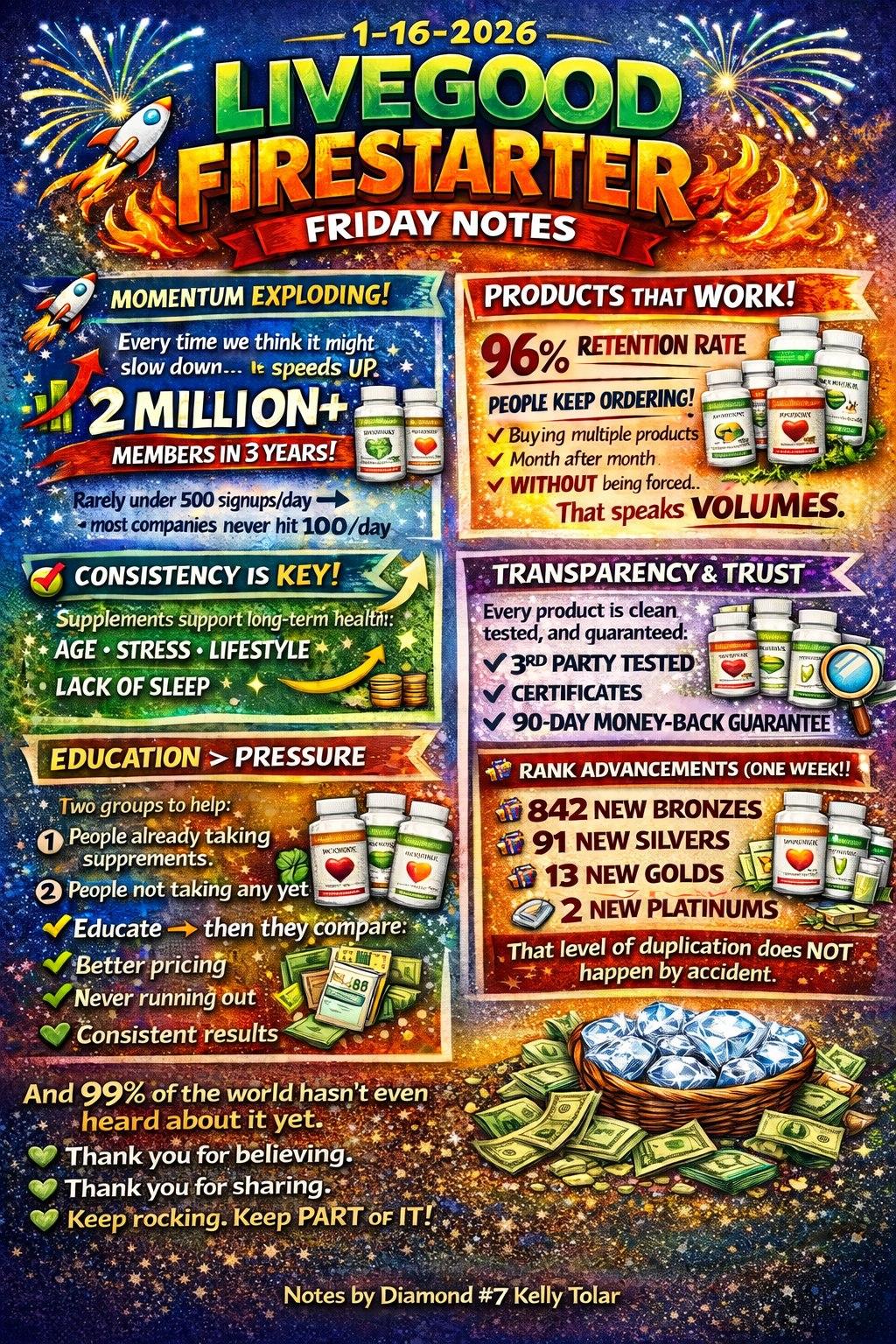
  • LiveGood BlackSeed Oil ~
    Highest Quality / Lowest Price
    GET IT HERE
    https://www.LiveGood.com/blackSeedOil/javrie
    With 5% Thymoquinone. . .WHY even consider anything but LiveGood???
    Are You a "RESEARCH GEEK" Like Me
    ***************************
    THY-MO-QUI-NONE:
    (Source - Perplexity App)
    Thymoquinone is a natural phytochemical compound predominantly found in the plant Nigella sativa, commonly known as black cumin. It possesses multiple biological activities, including anti-inflammatory, antioxidant, neuroprotective, hepatoprotective, immunomodulatory, and anticancer effects.
    Thymoquinone has demonstrated benefits in experimental models for conditions such as neurodegenerative diseases (like Alzheimer's and Parkinson's), liver damage, diabetes, inflammation-related diseases, and even cancer. However, it has poor oral bioavailability and low solubility, so advanced delivery systems like lipid-based carriers are being researched to improve its therapeutic effectiveness.
    Mechanistically, thymoquinone reduces oxidative stress, modulates inflammatory cytokines, protects mitochondrial function, and regulates cell apoptosis pathways, which collectively contribute to its protective effects in various tissues, including the brain, liver, and eyes .
    Key Properties and Effects:
    Anti-inflammatory and antioxidant actions reduce markers like TNF-α, IL-1β, and oxidative stress products.
    Neuroprotective effects demonstrated in vitro and in vivo through mechanisms that protect against amyloid beta accumulation, mitochondrial dysfunction, and inflammation to delay neurodegenerative progress.
    Hepatoprotective effects against toxic injury, including acetaminophen-induced liver damage, by decreasing serum enzymes and oxidative markers.
    Potential anti-cancer effects, including inhibition of tumor growth and induction of apoptosis in certain cancer cell types.
    Clinical and animal studies show safety and some efficacy, though clinical trials remain limited.
    CHALLENGES:
    Poor water solubility and bioavailability.
    Improved delivery methods such as thymoquinone-solid-lipid nanostructures and nanostructured lipid carriers are under development for enhanced absorption and sustained release .
    Thus, thymoquinone is a promising bioactive compound with a wide range of protective health effects supported by preclinical research and emerging delivery technologies to optimize its use .
    https://www.livegood.com/javrie
    LiveGood BlackSeed Oil ~ Highest Quality / Lowest Price 👇GET 👇 IT 👇HERE 👇 https://www.LiveGood.com/blackSeedOil/javrie With 5% Thymoquinone. . .WHY even consider anything but LiveGood??? Are You a "RESEARCH GEEK" Like Me❓️ *************************** THY-MO-QUI-NONE: (Source - Perplexity App) Thymoquinone is a natural phytochemical compound predominantly found in the plant Nigella sativa, commonly known as black cumin. It possesses multiple biological activities, including anti-inflammatory, antioxidant, neuroprotective, hepatoprotective, immunomodulatory, and anticancer effects. Thymoquinone has demonstrated benefits in experimental models for conditions such as neurodegenerative diseases (like Alzheimer's and Parkinson's), liver damage, diabetes, inflammation-related diseases, and even cancer. However, it has poor oral bioavailability and low solubility, so advanced delivery systems like lipid-based carriers are being researched to improve its therapeutic effectiveness. Mechanistically, thymoquinone reduces oxidative stress, modulates inflammatory cytokines, protects mitochondrial function, and regulates cell apoptosis pathways, which collectively contribute to its protective effects in various tissues, including the brain, liver, and eyes . Key Properties and Effects: Anti-inflammatory and antioxidant actions reduce markers like TNF-α, IL-1β, and oxidative stress products. Neuroprotective effects demonstrated in vitro and in vivo through mechanisms that protect against amyloid beta accumulation, mitochondrial dysfunction, and inflammation to delay neurodegenerative progress. Hepatoprotective effects against toxic injury, including acetaminophen-induced liver damage, by decreasing serum enzymes and oxidative markers. Potential anti-cancer effects, including inhibition of tumor growth and induction of apoptosis in certain cancer cell types. Clinical and animal studies show safety and some efficacy, though clinical trials remain limited. CHALLENGES: Poor water solubility and bioavailability. Improved delivery methods such as thymoquinone-solid-lipid nanostructures and nanostructured lipid carriers are under development for enhanced absorption and sustained release . Thus, thymoquinone is a promising bioactive compound with a wide range of protective health effects supported by preclinical research and emerging delivery technologies to optimize its use . https://www.livegood.com/javrie
    Love
    1
    0 Comments 0 Shares 10190 Views
  • WARNING! This Website May Change Your Financial Future... Forever...!
    Participating in this program
    Means Joining a Community of like-minded People who have in Common a Sincere Desire to Help Each Other and Share in Order to Contribute to the Improvement of Everyone's Quality of Life.
    Join Us Today, Start Helping Others.
    Let's Share The Love.
    https://easyas1x2.com
    James McDonald.
    WARNING! This Website May Change Your Financial Future... Forever...! Participating in this program Means Joining a Community of like-minded People who have in Common a Sincere Desire to Help Each Other and Share in Order to Contribute to the Improvement of Everyone's Quality of Life. Join Us Today, Start Helping Others. Let's Share The Love. https://easyas1x2.com James McDonald.
    Love
    1
    0 Comments 0 Shares 5544 Views
  • Community Development Program.

    Participating in this program means joining a community of people who have in common a sincere desire to help each other and share in order to contribute to the improvement of everyone's quality of life.

    We all have the right to abundance and this community is a pleasant way to move forward towards the achievement of your goals.

    https://easyas1x2.com
    #Easyas1x2
    Community Development Program. Participating in this program means joining a community of people who have in common a sincere desire to help each other and share in order to contribute to the improvement of everyone's quality of life. We all have the right to abundance and this community is a pleasant way to move forward towards the achievement of your goals. https://easyas1x2.com #Easyas1x2
    0 Comments 0 Shares 2945 Views
  • Community Development Program.

    Participating in this program means joining a community of people who have in common a sincere desire to help each other and share in order to contribute to the improvement of everyone's quality of life.

    Although this community remains, above all, a private activity, not for profit and having nothing of a commercial entity, it remains nonetheless very concrete, tangible and very much alive!

    The legal aspect of the activity lies in the fact that it is a private activity where everyone freely exercises their legitimate right to give, without expectation of return. Our socio-financing platform allows you to donate and receive while building a community that can follow you in your future projects.

    Donations start at as low as $10 and the concept gradually leads to larger and larger donations as your community grows.

    For more transparency and your security, donations are sent directly from the donor to the beneficiary (peer-to-peer). No amount is sent to our platform which is offered completely free of charge.

    We all have the right to abundance and this community is a pleasant way to move forward towards the achievement of your goals.

    Whatever your motivations could be, we invite you to open your mind and focus your attention for a few moments on the program we offer.

    Thank you and welcome to Easyas1x2

    https://easyas1x2.com
    Community Development Program. Participating in this program means joining a community of people who have in common a sincere desire to help each other and share in order to contribute to the improvement of everyone's quality of life. Although this community remains, above all, a private activity, not for profit and having nothing of a commercial entity, it remains nonetheless very concrete, tangible and very much alive! The legal aspect of the activity lies in the fact that it is a private activity where everyone freely exercises their legitimate right to give, without expectation of return. Our socio-financing platform allows you to donate and receive while building a community that can follow you in your future projects. Donations start at as low as $10 and the concept gradually leads to larger and larger donations as your community grows. For more transparency and your security, donations are sent directly from the donor to the beneficiary (peer-to-peer). No amount is sent to our platform which is offered completely free of charge. We all have the right to abundance and this community is a pleasant way to move forward towards the achievement of your goals. Whatever your motivations could be, we invite you to open your mind and focus your attention for a few moments on the program we offer. Thank you and welcome to Easyas1x2 https://easyas1x2.com
    0 Comments 0 Shares 9180 Views
  • This is a Community of People Helping Each Other.
    Participating in Easyas1x2 program.
    Means Joining a Community of People who have in Common a Sincere Desire to Help Each Other and Share in Order to Contribute to the Improvement of Everyone's Quality of Life.
    Join Us Today, Start Helping Others. https://easy1x2.com/ref/Shahzad01

    #Shahzadahmad
    This is a Community of People Helping Each Other. Participating in Easyas1x2 program. Means Joining a Community of People who have in Common a Sincere Desire to Help Each Other and Share in Order to Contribute to the Improvement of Everyone's Quality of Life. Join Us Today, Start Helping Others. https://easy1x2.com/ref/Shahzad01 #Shahzadahmad
    Like
    Love
    2
    0 Comments 0 Shares 2518 Views
More Results
Sponsored

Buy Me A Coffee.

If You Would Like To Support Social Follow, Please Go To Buy Me A Coffee, Thank You. https://www.buymeacoffee.com/socialfollowme